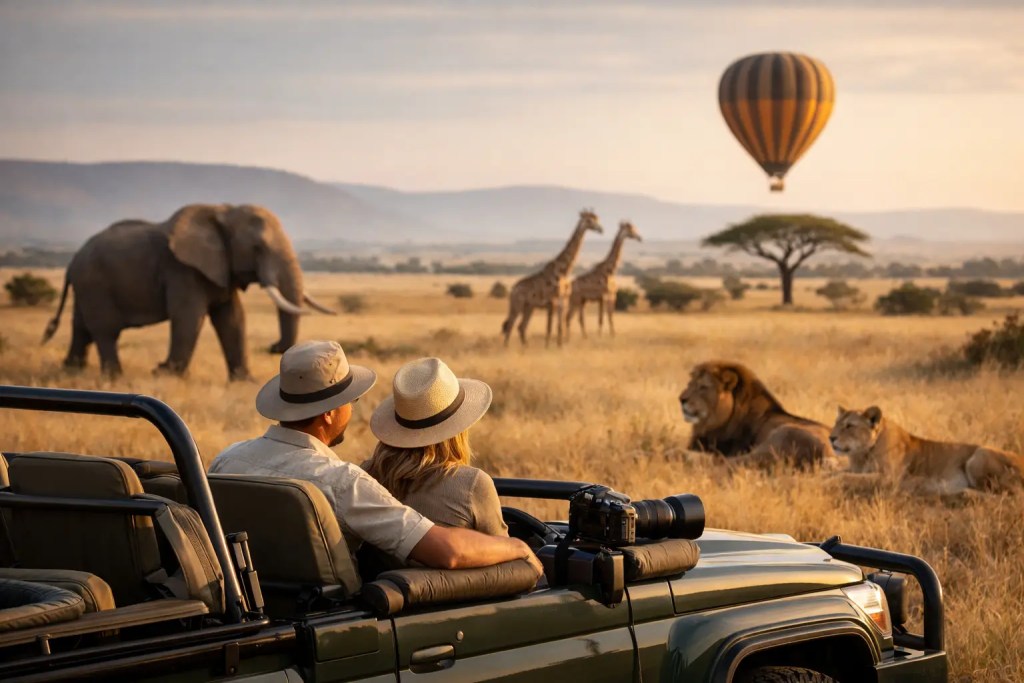
A family safari can go spectacularly right or feel far more complicated than it looked on paper. The best luxury African safari for families is rarely about choosing the most famous park and booking the nicest suite. It is about matching ages, attention spans, flight tolerance, wildlife priorities, and privacy expectations with the right country, the right lodge, and the right pace.
For families traveling from the US, that distinction matters. A well-designed safari feels exhilarating but easy – mornings that start with fresh coffee and elephant sightings, afternoons by a private plunge pool, and evenings when children are still talking about the leopard they saw before dinner. A poorly matched itinerary can mean too many flights, rigid schedules, or camps that are beautiful for adults but not truly set up for younger travelers.
What makes the best luxury African safari for families?
Luxury means more than thread count in this context. For families, it usually starts with space, flexibility, and guides who know how to read both wildlife and people. The strongest family safari experiences combine outstanding game viewing with villas or family tents that allow everyone to settle in comfortably. They also build in privacy, so parents are not worrying about whether a six-year-old will whisper through a lion sighting.
Private vehicles are often the real luxury. They let a family move at its own rhythm, return to camp when needed, and spend extra time at a sighting that captures a child’s imagination. They also make the experience feel personal rather than performative. If your family wants to focus on photography, birds, big cats, or a first safari education, a private guide can shape the day around that.
The other essential ingredient is honest planning around age. Some lodges welcome young children with full safari programs, bushcraft activities, and child-friendly menus. Others are better for teens and older children who can appreciate longer drives, tracking on foot, or more remote settings. There is no single best option for every family. There is only the best fit.
The best destinations for a luxury African family safari
Kenya for classic safari variety
Kenya is one of the strongest choices for families who want a polished first safari with range and flexibility. The Maasai Mara delivers the cinematic wildlife moments many families imagine, especially if big cats are high on the list. Private conservancies around the Mara often work even better for luxury family travel because they offer a more exclusive feel, fewer vehicles, and activities beyond standard game drives.
Those added experiences matter with children and teens. Night drives, guided bush walks in age-appropriate settings, and cultural visits can keep the trip layered rather than repetitive. Kenya also pairs well with the beach, which is useful for families wanting downtime after early safari mornings.
Tanzania for scale and spectacle
Tanzania suits families who want grand landscapes and iconic wildlife regions. The Serengeti is extraordinary, particularly during the migration, but it can also involve more movement depending on the time of year. That is where bespoke planning becomes crucial. The migration is not one fixed event, and chasing it too aggressively with children can create more logistics than many families actually enjoy.
For some, the right move is a beautifully paced northern Tanzania itinerary that combines the Serengeti with the Ngorongoro area and perhaps Tarangire, where elephants are often a major hit with younger travelers. The right lodge selection makes Tanzania feel deeply comfortable, but families should know that drive times can be longer than they expect.
South Africa for ease and multigenerational appeal
If your family values smooth logistics, South Africa deserves serious attention. The private reserves bordering Kruger are especially strong for luxury family safaris because they often combine excellent wildlife viewing with sophisticated lodging, easy road or air access, and a broad range of family-friendly options.
This is often a smart choice for multigenerational groups. Grandparents may appreciate shorter transfer times and a more predictable level of comfort, while children benefit from well-developed junior ranger programs and spacious accommodations. South Africa also pairs naturally with Cape Town and the Winelands, creating a trip that appeals to different interests without sacrificing safari quality.
Rwanda and Uganda for older children and teens
For families with older children or teenagers, gorilla trekking in Rwanda or Uganda can be profoundly meaningful. These journeys are less about classic game drive volume and more about a singular wildlife encounter that stays with you for years. They are best suited to families comfortable with active travel, specific age restrictions, and a more focused style of adventure.
Rwanda tends to feel more streamlined and polished in terms of access and overall routing. Uganda can be more varied and rewarding for families wanting a broader primate and wildlife experience, though it generally asks a bit more of travelers. Either way, these destinations are usually strongest when paired with mature, wildlife-curious kids rather than very young children.
Choosing the right lodge for family travel
The lodge can make or break a family safari. Privacy is usually the first filter. Family suites, connected tents, or exclusive-use villas allow everyone to relax between activities. They also give parents the freedom to maintain bedtime routines without feeling confined.
Beyond room configuration, look closely at policy and philosophy. Some luxury camps permit children but are fundamentally designed for adult travelers. Others actively welcome families and have thought through the details – shorter game drives, flexible meal times, kid-focused guiding, and staff who know how to make younger guests feel included without making the experience feel juvenile.
Pool access can be a major advantage, especially between game drives, but it is not a substitute for programming. For many families, the sweet spot is a lodge where children can bake with the chef, learn to identify tracks, or visit a local community in a respectful, well-curated way. Those moments help turn a safari from a passive wildlife trip into a shared family memory.
How long should a family safari be?
For most US-based families, seven to ten nights on the ground is a comfortable range. Shorter than that can feel rushed given the long-haul flights. Longer can be wonderful, but only if the pacing is gentle and the itinerary is not trying to prove a point by covering too much territory.
A common mistake is overestimating how many camps a family will enjoy in one trip. Two safari locations, done well, often feel far more luxurious than three or four with constant unpacking and small-aircraft transfers. If your family wants both safari and beach, a split itinerary can work beautifully – safari first, then rest.
Age matters more than most families expect
Young children
Families with younger children usually benefit from private vehicles, shorter transfer days, and lodges with genuine child-friendly infrastructure. The trip should leave room for naps, pool time, and spontaneous downtime. Wildlife is thrilling, but expecting a five-year-old to love every three-hour drive is optimistic.
Tweens and teens
Older children often engage more deeply with tracking, conservation conversations, photography, and longer game drives. This is when destinations such as the Serengeti, private Kenya conservancies, or gorilla trekking regions start to shine. Teenagers, especially, tend to appreciate a safari more when they are treated as participants rather than entertained as children.
Why private planning matters for luxury family safaris
The best luxury African safari for families is almost never a standard package. Families vary too much. One may want horseback riding and conservation access for wildlife-obsessed teens. Another may need interleading rooms, gentle schedules, and food flexibility for younger children. Another may be planning a milestone trip with grandparents and want exclusive-use properties that make the entire journey feel intimate and effortless.
That is why tailored planning matters so much at the luxury level. The value is not simply in getting the booking right. It is in sequencing the trip intelligently, choosing camps with the right guiding style, managing aircraft weight restrictions and transfer timing, and building enough flexibility that the trip feels easy from the moment you leave home. For families making a significant investment in Africa, white-glove coordination is not an extra. It is part of the experience.
At Explorest Travel, this is where the difference shows. The right safari is curated around your family’s pace, interests, and comfort standards rather than squeezed into a fixed template.
When to go for the best experience
Timing depends on what your family values most. Dry seasons generally deliver easier wildlife viewing, but they also bring higher demand and a more premium price point. Shoulder seasons can be excellent for families seeking strong value, beautiful landscapes, and a slightly quieter atmosphere, though weather becomes more variable.
School calendars naturally shape many family trips, which means summer and holiday periods need earlier planning. If you are traveling during peak dates and want the best family suites or exclusive-use villas, it is wise to plan well in advance. The top properties do not stay available for long.
A luxury family safari should feel expansive, not over-engineered. Choose fewer places, better places, and experiences that suit the people actually taking the trip. When the planning is thoughtful, Africa has a rare way of meeting every generation where they are – and still leaving everyone a little changed by it.