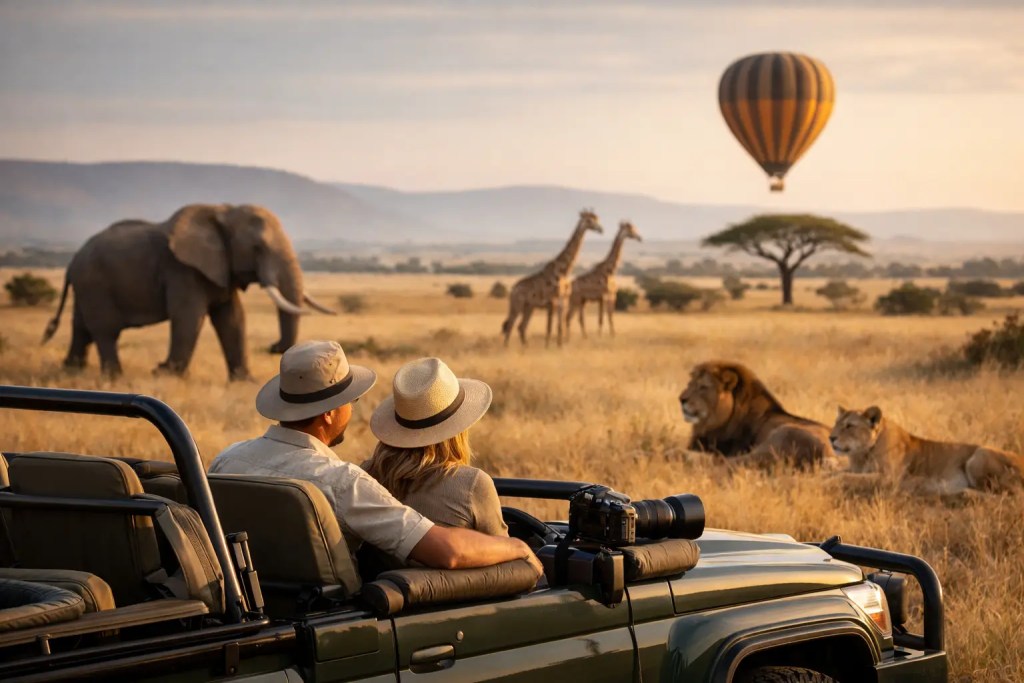
A great safari rarely begins with a map. It usually begins with a feeling: seeing a lion at first light, hearing elephants move past camp after dinner, or finally taking the family trip that has lived in conversation for years. To start your safari planning well, you need more than a list of parks. You need a clear sense of what kind of experience you want, how you want it to feel, and what level of detail will make the journey effortless once you are on the ground.
That matters because safari planning is not simply about choosing a country and booking a lodge. The best trips are shaped around seasonality, wildlife patterns, flight routing, camp style, pace, and the small preferences that change everything, from whether you prefer a tented camp with old-world character or a polished lodge with a spa and private plunge pool. When the trip is a major investment in time and money, those details are not extras. They are the trip.
How to start your safari planning with the right priorities
The first question is not where to go. It is why you are going. A honeymoon safari, a family celebration, a serious wildlife photography trip, and a first-time African safari may all include game drives, but they should not be designed the same way.
Some travelers want iconic wildlife and the classic East Africa rhythm of dawn drives and wide-open plains. Others care just as much about privacy, design, food, and time to slow down between sightings. Some want gorilla trekking added to a broader safari, while others want South Africa for a polished mix of safari, wine country, and city time. The most successful itineraries start by identifying what matters most: species, scenery, exclusivity, comfort, pace, or a combination of all five.
This is also where honesty helps. If you do not want to repack every two nights, say so. If you are traveling with children and want shorter game drives, that should shape the plan from the start. If this trip marks a milestone and you want every property to feel exceptional, that standard should guide every recommendation.
Choose the right safari destination, not just the famous one
Africa rewards specificity. Kenya, Tanzania, Rwanda, Uganda, and South Africa all offer extraordinary safari experiences, but they deliver them in very different ways.
Kenya is often a strong choice for travelers who want variety and character. The Maasai Mara offers classic big game viewing, especially during the Great Migration months, while private conservancies create a more exclusive experience with fewer vehicles and added flexibility. Kenya also suits travelers who want to pair wildlife with meaningful cultural access or combine several distinct ecosystems in one trip.
Tanzania tends to appeal to travelers drawn to scale and drama. The Serengeti is iconic for good reason, but it is not one thing year-round. Wildlife movement changes by season, and where you stay should reflect that. Northern Tanzania also works beautifully with the Ngorongoro Crater, while southern parks can deliver a more remote, less conventional safari.
Rwanda and Uganda enter the conversation when primates are a priority. Gorilla trekking is unforgettable, but it comes with physical demands, permit logistics, and a very different emotional tone than a traditional game-drive safari. For many travelers, it works best as part of a broader East African journey rather than a standalone wildlife trip.
South Africa is often ideal for first-time safari travelers who want ease and range. It can combine well-run private reserves, excellent guiding, sophisticated lodges, and straightforward logistics with Cape Town, the Winelands, or the coast. It is especially appealing for couples and multigenerational families who want luxury without giving up convenience.
The right answer depends on your priorities, your travel window, and how much moving around feels enjoyable rather than exhausting.
Timing changes everything
Safari planning is shaped by season more than many travelers expect. Dry seasons often bring easier game viewing because animals gather near water and vegetation thins out. Green seasons can offer dramatic skies, newborn animals, lower rates in some regions, and fewer crowds. Migration-focused trips require even more precision, since river crossings and herd movement are never guaranteed on a fixed schedule.
That does not mean there is only one good time to go. It means each season offers a different version of the destination. A skilled planning process matches your expectations to the season instead of selling a one-size-fits-all ideal.
The lodge matters as much as the wildlife
Two travelers can visit the same reserve and come home with entirely different impressions based on where they stayed. Lodge selection shapes the mood of the trip just as much as the game viewing.
Some camps prioritize intimacy, guiding quality, and immersion in the landscape. Others deliver a more resort-like feel with expansive suites, wellness offerings, and a stronger focus on downtime between activities. Neither is inherently better. It depends on whether you want romance, family ease, serious wildlife access, or a mix.
Location matters, but so does fit. A beautiful property that requires long transfers and offers a rushed schedule may not feel luxurious in practice. Likewise, an ultra-stylish lodge may not be the best choice for travelers who care most about tracking wildlife from first light to sundown. The strongest recommendations balance aesthetics with logistics, wildlife value, and the personality of the trip.
Why private access can change the experience
For many luxury travelers, the difference between a good safari and an exceptional one is access. Private conservancies and well-positioned reserves often allow a quieter, more flexible experience with fewer vehicles at sightings, more personalized guiding, and in some cases activities not permitted in national parks.
That may mean a private vehicle for your family, a bush breakfast arranged after a morning drive, or an itinerary that feels less like a circuit and more like a journey designed around your pace. If exclusivity matters, this is usually where it shows.
Plan the logistics early, especially for premium travel windows
The most sought-after safari camps and lodges book well in advance, particularly for peak migration periods, holiday travel, and prime family vacation dates. Waiting too long can force compromises in routing, room categories, or the overall flow of the trip.
This is especially relevant if you want interconnected experiences such as a Kenya and Rwanda combination, a Tanzania safari followed by the beach, or a South Africa itinerary that pairs safari with Cape Town and the Winelands. On paper, these can look simple. In practice, timing flights, securing permits, coordinating baggage limits on bush aircraft, and protecting the pace of the journey require careful sequencing.
When you start your safari planning early, you create room for better choices. You also avoid building a luxury trip around leftover availability, which is rarely where the best value lies.
Know where to spend and where to simplify
Not every part of a safari needs to be at the highest possible price point to feel exceptional. What matters is understanding where an upgrade improves the experience in a meaningful way.
A premium guide, a superior location during a key wildlife season, or a private vehicle can be far more valuable than simply choosing the most expensive suite. In other cases, spending more on air connections that reduce layovers and protect your energy is money well spent. The trade-off is that adding every premium feature can create a trip that is expensive but not necessarily better matched to how you travel.
The goal is not maximum luxury in every line item. It is thoughtful luxury, placed where it delivers the most impact.
Work with complexity, not against it
African safari travel involves moving parts that are easy to underestimate from the United States. Entry requirements, regional flights, weight restrictions, health protocols, weather variation, and the realities of remote travel all matter. They do not need to feel stressful, but they do need to be handled well.
That is one reason bespoke planning has such value in this category. The right expertise does more than reserve beautiful places to stay. It connects the trip into one coherent experience, from arrival meet-and-greet to lodge pairing to real-time support if weather shifts or a flight schedule changes. For travelers investing in a once-in-a-lifetime journey, that level of orchestration is not indulgent. It is sensible.
At Explorest Travel, that planning process is built around personal fit rather than packaged inventory. The result is a safari that reflects your travel style, your priorities, and the standard of service you expect throughout.
Start your safari planning with a clearer vision
If you are at the beginning, resist the urge to collect random lodge names and sample itineraries before you know what you want the trip to do. Start with the experience you want to have: the wildlife moments you care about, the level of comfort you expect, the pace that feels right, and the kind of places where you feel most at ease.
From there, the right destinations, camps, and routing become much easier to define. A safari should feel expansive when you are in Africa, not complicated while you are planning it. The best place to begin is with a conversation detailed enough to turn a dream trip into one that fits you precisely.