A Great Migration safari can be extraordinary or frustrating, and the difference usually comes down to timing, geography, and expectations. If you are researching how to plan Great Migration travel, the first thing to know is that this is not a single event staged neatly on a calendar. It is a moving wildlife pattern shaped by rain, grazing, river levels, and the constant pressure of predators.
That unpredictability is part of the appeal. It is also why thoughtful planning matters so much, especially for travelers investing in a once-in-a-lifetime East Africa journey. The right plan does not chase a mythical perfect week. It builds in the best possible odds, pairs the migration with exceptional camps and guiding, and creates a safari that still feels remarkable even if the herds shift earlier or later than expected.
How to plan Great Migration travel around timing
The Great Migration typically refers to the annual movement of wildebeest, zebra, and gazelle through Tanzania’s Serengeti and Kenya’s Maasai Mara. While people often speak about it as one moment, it unfolds across many months and regions.
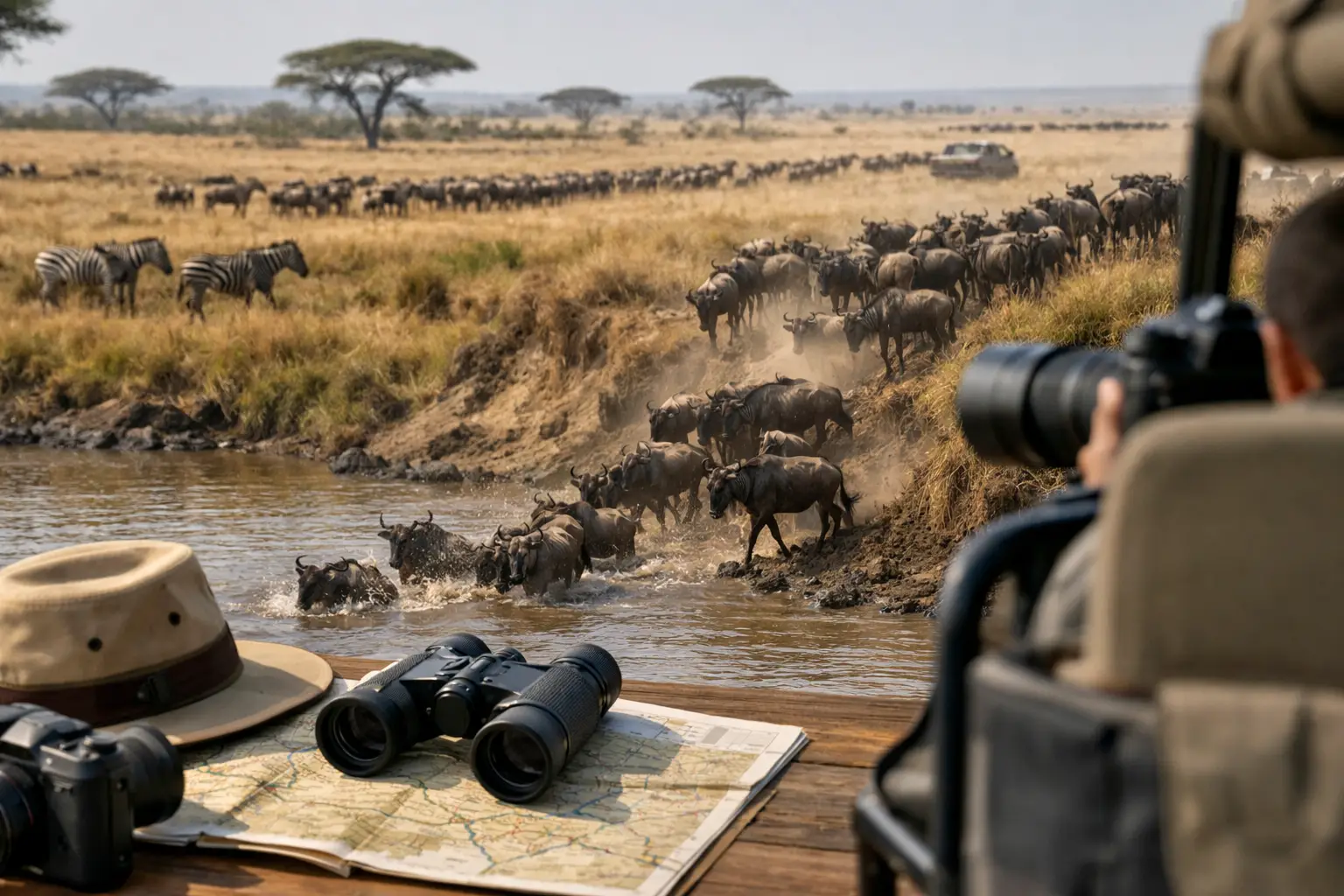
From roughly December through March, many herds gather in the southern Serengeti and Ndutu region, where calving season brings dramatic predator action and excellent game viewing. Around April and May, the herds often begin moving northwest as rains influence grazing patterns. By June and July, attention frequently turns to the western and northern Serengeti, where river crossings may begin. From July through October, many travelers focus on the Maasai Mara and northern Serengeti for famous crossing scenes and dense concentrations of wildlife. Later in the year, the movement starts shifting south again.
Those general patterns are useful, but they are not guarantees. If your dream is specifically to witness a river crossing, you need to accept some uncertainty. Animals may gather at a riverbank for hours and turn away. They may cross overnight. They may cross in a different section than expected. If your goal is broader – abundant wildlife, strong predator sightings, and the electric feeling of being in the migration zone – your planning options become much more flexible.
Decide what kind of Great Migration experience you want
This is the step many travelers skip, and it affects everything that follows. When people say they want the Great Migration, they may mean very different things.
Some want the drama of a Mara River crossing, with crocodiles below and thousands of wildebeest pressing forward. Others are more interested in calving season, when the southern plains feel endless and predator interactions can be intense. Some want peak wildlife density with luxurious camps and easier logistics. Others care more about photography, private guiding, fewer vehicles, or combining the migration with gorilla trekking or a beach extension.
There is no single best version of this safari. A river crossing season itinerary may deliver adrenaline and iconic scenes, but it often comes with higher rates, tighter availability, and more vehicles in sought-after areas. Calving season can be every bit as thrilling, with excellent visibility across open plains and beautiful green landscapes after rain. For families or first-time safari travelers, that trade-off can be especially appealing.
Match the season to your priorities
If you want iconic crossings and do not mind more competition for top camps, target northern Serengeti or Maasai Mara dates in the broad July to October window. If you want dramatic wildlife with slightly different energy and often stronger value, consider January through March in southern Serengeti and Ndutu. If you prefer shoulder-season travel, ask what that year’s rainfall is doing before locking in assumptions based on a generic migration chart.
Choose the right destination mix
For many travelers, the question is not just how to plan Great Migration timing, but whether to base the trip in Tanzania, Kenya, or both.
Tanzania offers enormous scale and variety. The Serengeti ecosystem is vast, and splitting time between regions can help you follow likely herd movement while experiencing very different landscapes. It also pairs beautifully with Ngorongoro Crater, Tarangire, and private concessions that add depth beyond the migration itself.
Kenya’s Maasai Mara is more compact and often excellent for concentrated game viewing. During migration months, it can deliver extraordinary action, especially when the herds are present in force. It also works well for travelers who want a shorter safari with premium lodges, strong guiding, and the option to add cultural experiences or a beach finish.
A combined Kenya and Tanzania itinerary can be exceptional, but it needs to be designed carefully. Border logistics, flight schedules, baggage limits, and pacing all matter. For some travelers, one country done properly is more elegant than trying to cover too much ground.
Pick camps based on location, not just polish
Luxury on safari should feel effortless, but for migration planning, location matters as much as design. A beautiful camp in the wrong area can leave you far from the action you came to see.
This is where expert curation becomes especially valuable. Mobile camps can position guests close to herd movement in key seasons, while permanent luxury lodges may offer more space, more amenities, and a stronger sense of place. Neither is inherently better. It depends on whether your priority is tactical wildlife access or a more expansive lodge experience.
You should also look beyond the suite itself. Ask about guiding quality, vehicle policy, access to private conservancies or concession areas, ability to do off-road viewing where permitted, and how far typical game drives range. A camp that photographs beautifully online may still be less well positioned than a quieter property with exceptional guiding and sharper access.
Book earlier than you think
The best migration camps and top guide teams book far in advance, especially for prime river crossing months and holiday-adjacent travel. If your dates are fixed and your standards are high, planning 9 to 15 months ahead is wise. Last-minute trips are possible, but they usually involve compromise on room category, routing, or exact location.
Plan for the full journey, not just the headline sighting
A sophisticated safari does not depend on one dramatic crossing to justify itself. The most satisfying itineraries are layered. They include migration-focused days, but they also make room for landscapes, slower moments, and variety in wildlife viewing.
For example, pairing northern Serengeti with Ngorongoro can balance migration intensity with one of Africa’s most iconic crater ecosystems. Combining Maasai Mara with Laikipia can bring together classic plains game viewing and a more private, conservation-led experience. Families may benefit from a lodge with flexible activities and a gentler pace between transfer days.
This matters because migration sightings are never fully controllable. If the rest of the itinerary is equally thoughtful, the trip still feels complete and richly rewarding.
Understand the practical trade-offs
Luxury safari planning should feel exciting, but it also benefits from realism. Migration travel often means small bush flights, soft-sided luggage restrictions, early game drives, and locations where weather can change road conditions quickly. Premium camps can make remote travel feel graceful, but East Africa is still a real wilderness environment.
It is also worth discussing crowd levels honestly. Certain sections of the Mara and northern Serengeti can be busy during peak moments. The best answer is not always to avoid peak season altogether. Sometimes it is to choose camps with superior positioning, private access, or guides who know how to read movement and avoid bottlenecks.
Budget matters as well. Great Migration safaris span a wide range, but the best-located luxury properties command premium rates in high season. Travelers who are flexible on timing can often secure a more favorable balance of cost, exclusivity, and wildlife quality by traveling just outside the most compressed demand periods.
Work with someone who plans around variables
The strongest migration itineraries are not copied from a standard package. They are built around your dates, travel style, preferred level of privacy, interest in photography or family-friendly pacing, and tolerance for uncertainty.
That includes details many travelers do not initially think about: where to overnight before a bush flight, how to minimize backtracking, which camps work best together, when to use charter flights instead of scheduled hops, and how to balance a marquee wildlife event with the comfort expected from a high-investment trip.
For travelers seeking a polished, deeply personalized safari, this is where a specialist such as Explorest Travel can make a real difference. The value is not just in booking rooms. It is in shaping an itinerary with the right sequence, trusted partners on the ground, and backup thinking behind every transfer and camp choice.
A simple framework for how to plan Great Migration trips
Start with your non-negotiables: travel dates, number of nights, desired comfort level, and whether your priority is crossings, calving season, photography, family travel, or a broader East Africa safari. Then identify which region is most likely to deliver that experience during your timeframe.
Next, choose camps for access and guiding, not only aesthetics. Build an itinerary with enough nights in each place to absorb the rhythm of safari instead of rushing from stop to stop. Finally, protect the experience by planning around logistics early, especially if you need top suites, private vehicles, or holiday-season availability.
The Great Migration rewards travelers who approach it with both ambition and flexibility. If you plan for the best odds rather than absolute certainty, you give yourself the chance to experience East Africa at its most alive – not as a checklist item, but as a journey that feels personal, refined, and genuinely worth the distance.