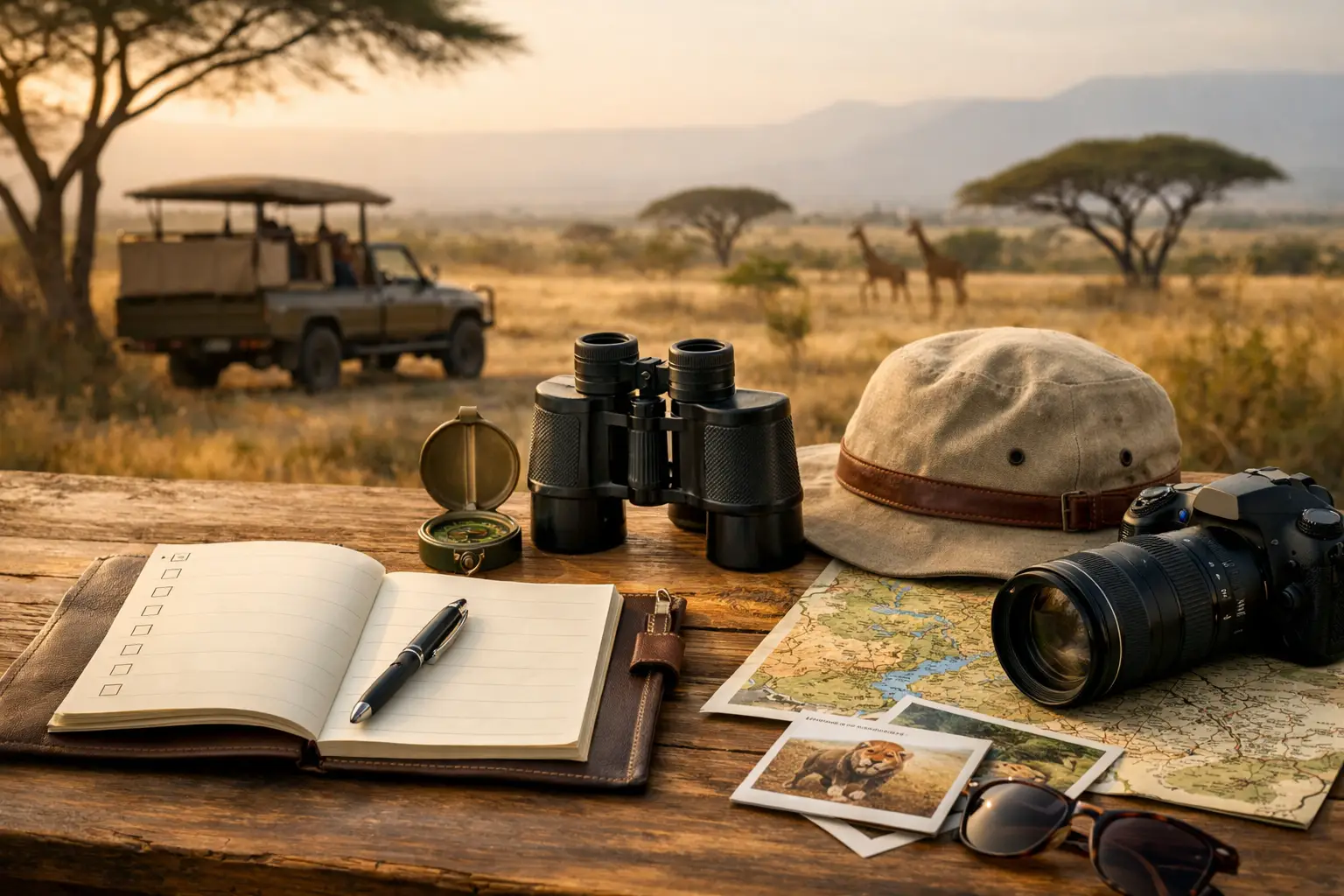
The difference between a good safari and an exceptional one is rarely luck. More often, it comes down to decisions made months before you ever hear lions after dark or watch elephants cross in front of your vehicle at sunrise. A thoughtful safari trip planning checklist helps you make those decisions with clarity, especially when the journey involves multiple camps, regional flights, and a once-in-a-lifetime budget.
For luxury travelers, safari planning is not simply about choosing a country and booking a lodge. It is about matching the right landscape, wildlife rhythm, guide quality, and level of comfort to the kind of experience you actually want. The best itineraries feel effortless in the moment because they were carefully shaped in advance.
Start your safari trip planning checklist with the right goal
Before comparing destinations or camps, define what success looks like for this trip. Some travelers want the drama of the Great Migration and the iconic feel of East Africa. Others care more about gorilla trekking, a family-friendly pace, photographic guiding, or a private villa where every detail feels tailored.
This step matters because safari destinations are not interchangeable. Kenya and Tanzania may both deliver classic game viewing, but the style, routing, and seasonal strengths can differ considerably. Rwanda and Uganda appeal to travelers prioritizing primates, forest experiences, and a different pace from the savanna circuit. South Africa can be ideal for first-time safari guests who want excellent infrastructure, malaria-free options in some areas, and a polished combination of wildlife and city or wine country.
If you begin with a vague goal, the trip can become a collection of impressive reservations that do not quite fit together. If you begin with a clear intention, every later choice becomes easier.
Choose the country based on experience, not reputation
The most famous safari destination is not always the best one for you. A couple celebrating a milestone anniversary may prefer a more private, slower-moving itinerary with exceptional guiding and a small number of perfectly chosen camps. A family traveling with children might prioritize ease, space, shorter transfers, and flexible activities. Serious wildlife enthusiasts may accept longer travel days if it means access to a specific region at the right time of year.
Kenya is often favored for its elegant private conservancies, strong guiding culture, and the ability to combine classic wildlife viewing with meaningful cultural encounters. Tanzania excels for sweeping landscapes and grand safari scale, particularly in itineraries that move from the Serengeti to the Ngorongoro area and beyond. Rwanda and Uganda are exceptional when primate trekking is central to the trip, though they can also be paired with savanna safari for contrast. South Africa is highly versatile and works well for travelers who want luxury at every step, from safari lodges to metropolitan stays.
The trade-off is simple: the more ambitious the routing, the more important timing and logistics become. Multi-country safaris can be extraordinary, but only when they are paced correctly.
Time the trip around wildlife and comfort
One of the most useful parts of any safari trip planning checklist is seasonality. Wildlife viewing is shaped by rainfall, water availability, vegetation, migration patterns, and local temperatures. That means there is no single best month for all of Africa.
Dry seasons often produce excellent game viewing because animals gather near water and bush cover is thinner. Green seasons can be beautiful, quieter, and rewarding for photographers, with dramatic skies and fewer vehicles. They may also bring lower rates in some destinations, though that is not always the case at top properties.
The right choice depends on priorities. If your goal is to witness a specific migration crossing, timing has to be precise, and even then nature does not perform on command. If you want varied wildlife, fewer crowds, and lush scenery, shoulder season can be the smartest option. Gorilla trekking has its own weather considerations, and beach add-ons can shift what months make the most sense overall.
This is where expert planning pays off. The ideal window is not only about animal movement. It is also about balancing availability, pricing, flight schedules, and the kind of atmosphere you want on the ground.
Decide how much moving around feels right
A common planning mistake is trying to do too much. On paper, four camps across two countries may look exciting. In practice, frequent repacking and repeated light-aircraft transfers can chip away at the ease luxury travelers expect.
The number of stops should match the length of the trip and your tolerance for movement. For many travelers, two or three well-chosen safari bases create more depth than an overly ambitious circuit. A private conservancy paired with one marquee wildlife area often works beautifully. For longer journeys, adding a second country can make sense if the experiences are distinct enough to justify the extra logistics.
Ask not only what you want to see, but how you want to feel while seeing it. Rested, unhurried travelers tend to enjoy safari more deeply than those racing through a checklist of places.
Be selective about lodges, not just room categories
Luxury on safari is about far more than thread count and plunge pools. The best lodge for one traveler may be the wrong one for another. Some properties are intimate and design-led, ideal for couples who value privacy and atmosphere. Others are better for families, with interconnecting tents, child-friendly guiding, and a more flexible structure. Some excel because of their location and wildlife access; others stand out for service, cuisine, or a particular sense of place.
Look closely at guiding standards, vehicle policy, camp size, and the quality of the surrounding concession or reserve. A beautiful lodge in a weaker wildlife area may not deliver the safari you imagined. At the same time, an ultra-rustic camp in a brilliant location may not suit travelers expecting a more polished level of comfort.
This is one of the most personal parts of the planning process. The right fit comes from understanding your preferred style, your pace, and how much you value exclusivity versus atmosphere.
Build the practical details into your checklist early
The glamorous side of safari gets the attention, but the operational side protects the experience. Passports, visa rules, health requirements, baggage limits on bush flights, travel insurance, and arrival timing all need to be confirmed well before departure.
East and Southern African itineraries often involve small aircraft with strict luggage rules, usually favoring soft-sided bags. That single detail can affect what you pack and how smoothly your internal transfers go. Vaccination guidance and malaria protocols depend on destination and route, so they should be reviewed with your physician early enough to avoid last-minute pressure.
International flight choices also matter more than many travelers expect. After a long-haul journey, the difference between an awkward overnight transit and a well-timed connection can shape the first days of the trip. For high-investment travel, the easiest routing is often the wiser one.
Plan around the people traveling, not the idea of safari
A strong itinerary reflects the actual travelers. If you are planning for children or grandparents, game-drive lengths, terrain, and transfer times need careful thought. If the trip marks an anniversary, honeymoon, or major birthday, privacy, room layout, and special experiences may carry more weight than seeing every possible species.
Photographers may want camps with flexible schedules, private vehicles, and guides who understand light and positioning. Food lovers may care about lodge cuisine more than they expected. Travelers who value conservation may want to prioritize properties with strong community and environmental commitments.
There is no prestige in choosing the most complicated itinerary if it does not match your style. The most memorable safaris feel personal, not performative.
Leave room for the extraordinary
The best safari plans are meticulous, but they should never feel rigid. Weather shifts. Wildlife moves. A guide may suggest staying longer with a leopard because the moment is unfolding beautifully. A child may be captivated by giraffes and care less about ticking off the Big Five. A private bush breakfast or a quiet evening overlooking a waterhole may become the part of the trip you talk about most.
That is why the smartest checklist includes structure without overengineering every hour. Build in enough intention to protect quality, and enough flexibility to let Africa surprise you.
For travelers who want the process handled with the same care as the trip itself, a bespoke planning approach makes all the difference. Explorest Travel designs safaris with that principle in mind, aligning destination expertise, trusted local partners, and white-glove coordination around each client’s priorities.
A safari is one of the rare journeys where anticipation is part of the pleasure. Plan it thoughtfully, and by the time you arrive, all that is left to do is look up when the guide cuts the engine and the landscape goes quiet.