The difference between a smooth safari and an overstuffed one often comes down to a soft duffel bag and a little restraint. If you are wondering what to pack safari journeys across East or Southern Africa, the answer is not more clothing. It is the right clothing, the right layers, and a few well-chosen essentials that make bush flights, game drives, and elegant lodge stays feel effortless.
Safari packing is specific for a reason. Many itineraries include small aircraft with strict luggage limits, early mornings that begin cold, afternoons that turn warm, and lodges where laundry is often available and surprisingly efficient. That means the best packing strategy is thoughtful rather than extensive.
What to pack safari trips really need
The most common mistake travelers make is packing for a generic vacation instead of a working safari itinerary. A beach trip rewards options. A safari rewards practicality with polish. You want clothing that moves well, layers easily, photographs beautifully, and does not compete with dust, heat, or the rhythms of camp life.
Start with the bag itself. In many safari regions, especially where light aircraft are involved, a soft-sided duffel is strongly preferred and sometimes required. Hard-shell suitcases can be difficult to load into small cargo holds, and oversized luggage may need to be left behind. If your trip combines safari with Cape Town, the Winelands, or a beach extension, it is worth planning carefully so your luggage works across all segments.
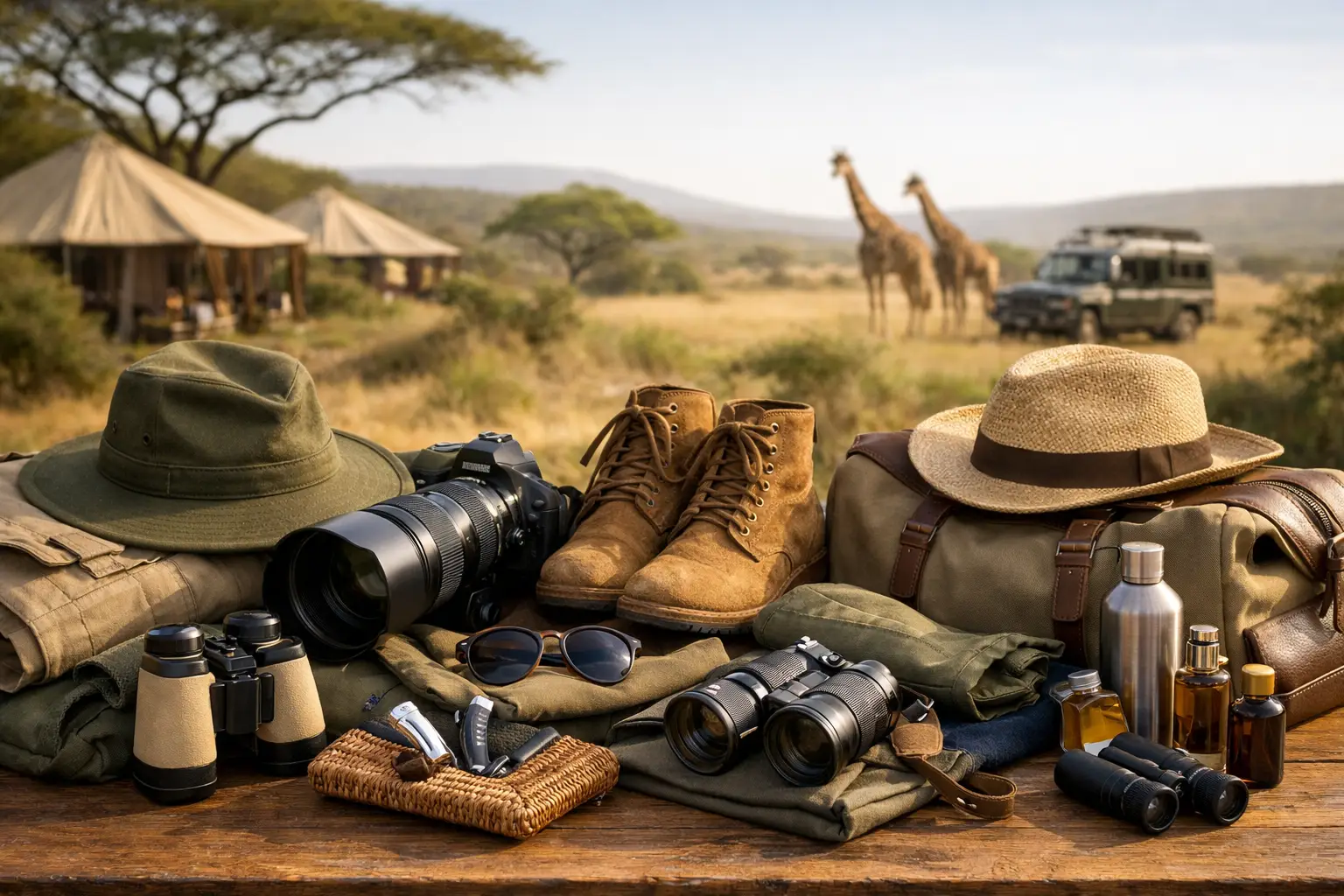
Clothing should follow the same logic. Neutral tones such as olive, tan, khaki, stone, and soft gray are ideal. They are practical in the bush and feel appropriate at most luxury camps and lodges. Bright white shows dust quickly, and very dark colors can attract heat during the day. Camouflage is best avoided altogether, as it is restricted or discouraged in several African countries outside of military use.
The core clothing pieces to prioritize
For most safari itineraries, you do not need a large wardrobe. You need reliable pieces that can be repeated comfortably. Three to four lightweight shirts, two pairs of safari-friendly pants or trousers, and one or two pairs of shorts are usually enough for a week, especially when laundry is available. Long sleeves are useful not because every day is cold, but because they offer sun protection and help during cooler morning drives.
A light sweater or fleece matters more than many first-time travelers expect. Dawn game drives can be genuinely chilly, particularly in East Africa and in South Africa’s winter months. Add a lightweight jacket, and you have the flexibility to adapt without carrying bulky outerwear. If you are traveling during the green season or to areas where afternoon showers are possible, a compact waterproof layer earns its place.
Even on a luxury safari, evenings are typically relaxed rather than formal. A simple collared shirt, an easy dress, or smart resortwear is usually enough for dinner. There is little value in bringing outfits that require steaming, special shoes, or accessories you will only wear once. The best luxury packing is understated and intentional.
Shoes can make or break the trip
Footwear is one of the few categories where overpacking is common and underthinking is expensive. Most travelers only need three pairs. A comfortable closed-toe shoe or walking shoe for travel days and camp use is essential. A second pair, such as supportive sandals or slip-ons, is helpful around the lodge. If your itinerary includes serious walking activities, gorilla trekking, or a dedicated bush walk, then a proper hiking boot becomes necessary.
It depends on the trip. If your safari is primarily vehicle-based in Kenya, Tanzania, or parts of South Africa, heavy boots may be unnecessary. If you are heading to Rwanda or Uganda for primate trekking, the calculation changes completely. Wet, steep, muddy trails demand far more support, grip, and protection than a classic game-drive safari.
Socks deserve more attention than they usually get. A few good pairs of moisture-wicking socks make early starts and active days much more comfortable, particularly if your itinerary includes walking or trekking.
The accessories worth space in your bag
The smartest safari accessories are the ones that work hard without taking over your luggage. A wide-brim hat or structured cap is useful for sun protection. Polarized sunglasses help cut glare on open plains and water. A lightweight scarf can be surprisingly versatile on dusty drives or cool mornings.
Binoculars are worth bringing if wildlife viewing is a priority. Some camps provide them, but quality varies. If you enjoy birding, photography, or simply prefer not to rely on shared equipment, your own pair will improve the experience every day.
A small day bag is also useful, especially for flights, transfers, and keeping essentials close during game drives. Choose something compact and easy to carry rather than a large backpack. You are not packing for expedition hardship. You are packing for comfort, convenience, and elegant movement through a well-run itinerary.
Health, sun, and personal items
When travelers ask what to pack safari adventures require beyond clothing, this is where details matter. Sun protection should be non-negotiable. Bring sunscreen, lip balm with SPF, and after-sun care if you are sensitive. The equatorial sun and high-altitude light in some safari regions are stronger than many visitors anticipate.
Insect repellent is another essential, even at very refined properties. Many camps provide it, but having your preferred formula is wise. If your doctor recommends malaria prophylaxis for your itinerary, that should be organized well before departure and packed in your carry-on, not your checked luggage.
A compact personal kit is usually enough. Include prescription medications, pain relief, antihistamines if you use them, motion sickness remedies if bush flights are part of the journey, and blister care if your trip includes trekking or walking. Luxury camps are often very well prepared, but remote does still mean remote.
Tech and camera gear without overdoing it
Safari invites photography, but it also tempts travelers to overpack expensive equipment they may not enjoy carrying. For many guests, a good phone, a dedicated camera, and one versatile lens are plenty. If photography is a central focus of your trip, your setup may be more elaborate, but it should still be intentional.
Bring extra memory cards, charging cables, and a portable power bank. Plug types vary by country and lodge, so a universal adapter is helpful. A dry bag or padded insert can protect gear from dust during drives. If you are bringing high-end camera equipment, lens cloths matter more than you think.
Do not overlook a simple practical detail: keep batteries, valuables, documents, and one change of clothing in your carry-on. Delayed luggage is rare but not impossible, and safari itineraries tend to move quickly.
What to pack safari by region and season
No single safari packing list fits every journey. Kenya and Tanzania often involve classic game-viewing circuits, internal flights, and a range of temperatures between morning and midday. Rwanda and Uganda require a different mindset if gorilla or chimpanzee trekking is on the agenda. South Africa can be especially varied, from cool winter mornings in the bush to stylish urban dining in Cape Town.
Season matters just as much as geography. Dry season generally favors breathable layers and dust-ready accessories. Green season may call for quicker-drying fabrics and light rain protection. If your itinerary spans multiple countries, the smartest approach is to pack around the most logistically demanding segment, then add a few refined pieces for city or coastal stays.
This is where tailored planning makes a difference. A private safari designed around your pace, accommodations, and activities should shape your packing list. A traveler heading to a remote tented camp for migration viewing needs something different from a family combining Singita-level lodges with a beach extension or a couple pairing South Africa with Rwanda.
A few things to leave at home
The easiest way to pack well is to edit hard. Leave behind heavy hair tools, formal eveningwear, multiple handbags, and anything that wrinkles easily or requires special care. Avoid strong fragrances, which can be intrusive in close safari vehicles and dining spaces. Jewelry should be minimal and travel-friendly.
It is also wise to skip the assumption that safari style means dressing up in costume. You do not need a matching khaki wardrobe or an outfit for every game drive. The most polished travelers on safari usually look relaxed, comfortable, and prepared rather than overly styled.
The best safari packing mindset
The most successful safari packing list does not try to cover every possibility. It supports the experience you actually came for – quiet dawn departures, long wildlife sightings, unhurried lunches between drives, and the rare pleasure of being beautifully looked after in extraordinary places.
If you pack for ease, flexibility, and comfort, the trip feels lighter from the moment you leave home. And that is exactly how a great safari should begin.