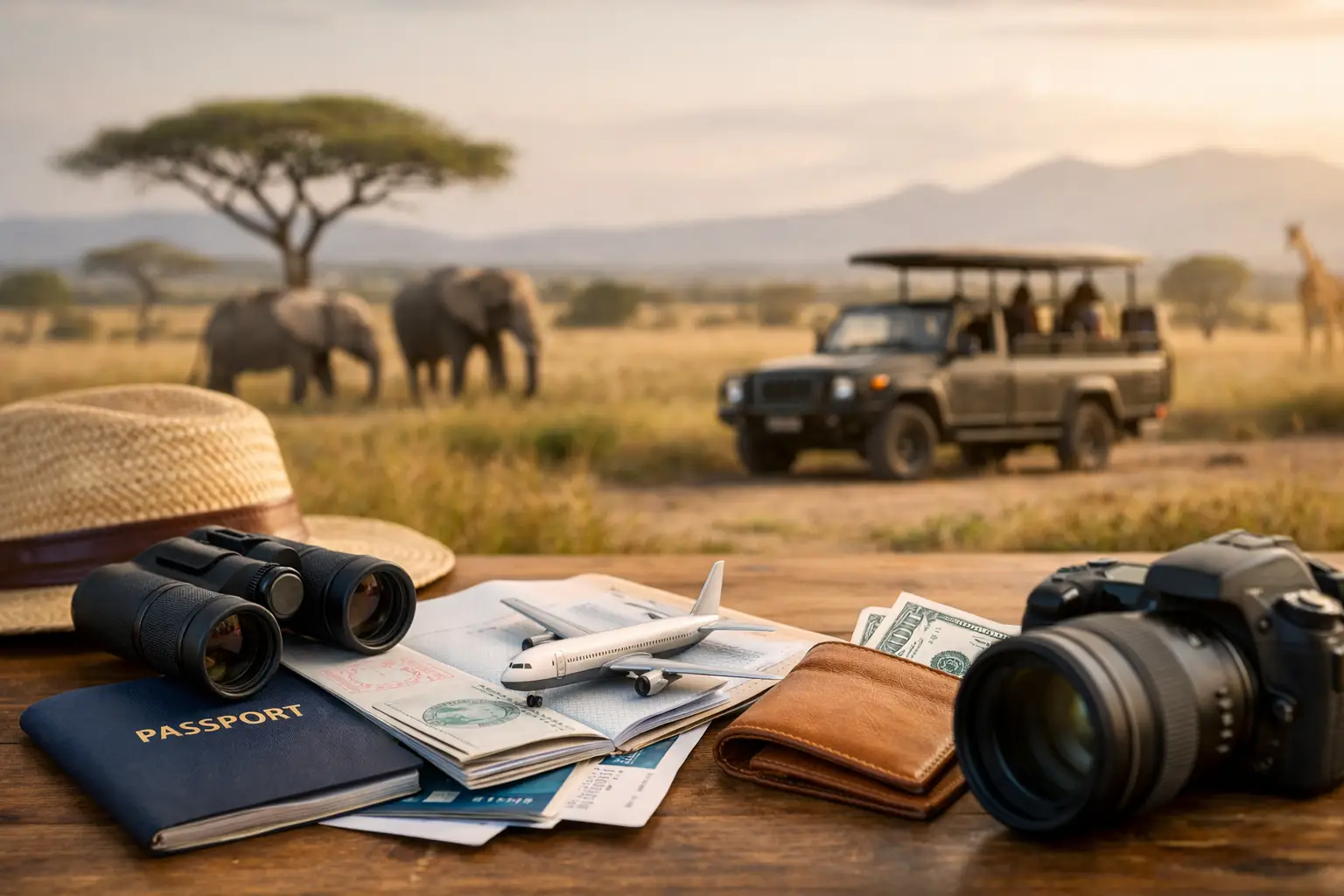
A beautifully planned safari can still stumble on one unglamorous detail – the visa. For US travelers, an african safari visa guide is less about paperwork for its own sake and more about protecting a significant investment in time, comfort, and carefully timed wildlife experiences.
When your itinerary includes gorilla trekking in Rwanda, the Serengeti migration, or a private conservancy stay in Kenya, entry rules are not a minor footnote. They affect flight routing, passport validity, arrival timing, and even whether a multi-country journey feels effortless or unnecessarily stressful. The good news is that visa planning for East and Southern Africa is usually manageable if handled early and with the right level of precision.
Why an African safari visa guide matters
Luxury safari travel often involves more moving parts than a single-country beach escape. You may arrive through one city, connect through another, cross a land border, and combine wildlife regions across several countries. Visa requirements can differ not only by nationality, but also by method of entry, purpose of travel, and the number of entries you need.
That last point matters more than many travelers expect. A straightforward Tanzania-only safari may require one set of documents and timing, while a Kenya and Rwanda combination with a return through Nairobi can change the visa equation entirely. Rules also evolve. Governments refine e-visa systems, adjust fees, or change arrival procedures, sometimes with little fanfare.
For most travelers, the real objective is simple: avoid last-minute friction. On a premium safari, every missed hour has a cost, whether that means losing a lodge night, missing a charter transfer, or arriving tired to a long-awaited game drive.
Start with the two details that shape everything
Before looking at country-specific guidance, confirm your passport validity and your itinerary structure. Most safari destinations expect your passport to be valid for at least six months beyond your travel dates. Many also want a certain number of blank visa pages. If you are combining multiple countries, this becomes especially important.
Then look at your route, not just your destination list. Are you entering Kenya once and departing from Tanzania? Are you stepping into Uganda for gorilla trekking and then returning to Rwanda? A visa that works perfectly for a single entry can become the wrong choice if your routing changes.
It is also wise to keep your travel documents consistent. Your flight bookings, passport details, lodge confirmations, and visa applications should align exactly, including middle names where required. Small discrepancies can cause surprisingly large delays.
Kenya, Tanzania, Rwanda, Uganda, and South Africa
Kenya
Kenya has shifted its entry processes in recent years, and travelers should pay close attention to the current system in place at the time of booking. In practical terms, US travelers should expect to complete formal entry authorization before travel rather than assuming traditional visa-on-arrival access will be available.
If your safari includes Nairobi, the Maasai Mara, Laikipia, Amboseli, or Kenya’s coast, apply well in advance and keep a printed as well as digital copy of your approval. Kenya is often used as a gateway for wider East Africa itineraries, so pay attention to whether you need a single entry or if your journey loops back through the country.
Tanzania
Tanzania remains one of the most requested safari destinations for US travelers, especially for itineraries focused on the Serengeti, Ngorongoro, Tarangire, Ruaha, or Zanzibar. The visa process is generally straightforward, but processing times can vary, and there are cases where travelers prefer to secure approval in advance rather than leave anything to chance on arrival.
If you are pairing mainland safari with Zanzibar, that usually does not create a separate international-entry issue, since Zanzibar is part of Tanzania. But if you are combining Tanzania with Kenya or Rwanda, your entries and exits matter. This is where an itinerary reviewed by a safari specialist can save real headaches.
Rwanda
Rwanda is exceptionally polished as a luxury safari destination, and that operational efficiency often extends to arrival procedures. For travelers visiting Volcanoes National Park for gorilla trekking or Akagera for a classic Big Five extension, visa processes are often relatively clear and traveler-friendly.
Still, Rwanda is frequently combined with Uganda or Kenya, and that is where regional planning becomes useful. In some cases, an East Africa-focused visa option may be worth considering if it is currently available and matches your exact route. In others, separate visas are cleaner.
Uganda
Uganda rewards travelers with extraordinary primate experiences, from gorilla trekking in Bwindi to chimpanzee tracking in Kibale. Its visa process is commonly handled in advance, and travelers should allow enough time for approval rather than treating it as a last-minute admin task.
Because Uganda often features in more adventurous or multi-stop itineraries, document accuracy matters. Trek permits, lodge stays, internal flights, and visa details should all align. If you are investing in a high-value primate journey, the administrative side should be just as thoughtfully managed as the experience itself.
South Africa
South Africa is often the simplest country in this mix for US passport holders, but simple does not mean casual. Entry rules can still include passport validity requirements, blank-page requirements, and additional considerations for families traveling with children.
If your safari includes Cape Town, the Winelands, Kruger, or a private reserve in Greater Kruger, verify the most current rules before departure. South Africa can serve as either a standalone safari destination or the final chapter of a broader African itinerary, so make sure your onward and return plans are reflected in your documentation.
The East Africa question: one visa or several?
One of the most common areas of confusion in any african safari visa guide is whether a regional visa makes more sense than individual country visas. The honest answer is: it depends on your exact route.
For some Kenya, Rwanda, and Uganda combinations, a shared regional option can simplify planning and reduce administrative repetition. For others, particularly if your itinerary includes Tanzania, separate country-specific approvals are still necessary. The right answer is not the one with the fewest forms. It is the one that matches your airports, border crossings, and number of entries without ambiguity.
This is also where luxury travel planning differs from do-it-yourself booking. On a handcrafted safari, the goal is not merely getting into each country. It is making sure every transition works elegantly, from international arrival to bush flight check-in to the lodge team awaiting you at the next airstrip.
When to apply and what to prepare
The safest approach is to begin visa research as soon as your itinerary is confirmed and apply within the appropriate window for each country. Too early can sometimes be as unhelpful as too late if entry authorizations have validity periods tied to travel dates.
At minimum, expect to need a valid passport, a passport-style photo in some cases, flight details, accommodation information, and payment method for fees. Some destinations may also ask for onward travel details or supporting documents.
Print everything. Yes, even if a destination accepts digital approvals. Airport Wi-Fi can be inconsistent, phone batteries fail, and immigration counters are not the place to discover a missing attachment. A slim document folder is still one of the most elegant travel tools you can carry.
Common mistakes that disrupt safari travel
The most expensive visa mistakes are rarely dramatic. More often, they are small assumptions that unravel at exactly the wrong moment.
Travelers sometimes assume East Africa functions as a single border zone. It does not. Others forget that re-entering a country can require a fresh or multi-entry approval. Families may overlook child-specific requirements, especially in South Africa. And some rely on outdated online advice that no longer reflects the current system.
Another common issue is leaving visa work until flights and camps are fully prepaid, then discovering a timing constraint or entry mismatch. On a bespoke safari, visa strategy should sit alongside air planning, not behind it.
Why high-touch planning makes a difference
Visa rules are public, but interpreting them against a custom safari is where expertise matters. A straightforward lodge stay in one country is one thing. A layered journey with premium camps, conservation experiences, helicopter transfers, and multiple border crossings is another.
That is why many travelers prefer to have the administrative framework reviewed with the same care as the accommodations. Explorest Travel approaches safari planning this way because details are part of the luxury experience, not separate from it. The goal is calm, not guesswork.
Final advice for a smoother arrival
Treat visas as part of the journey design, not an afterthought. Confirm rules directly before departure, match them carefully to your routing, and give yourself enough lead time for changes. When the paperwork is handled properly, what remains is the part you actually came for: the first quiet game drive at dawn, the sound of lions after dark, and the rare pleasure of a trip that feels effortless from the moment you land.