A great safari is rarely about checking off the Big Five and moving on. The best african safari destinations are the ones that match your travel style, wildlife priorities, preferred pace, and standards of comfort – because the same trip that feels perfect for one traveler can feel too fast, too remote, or too crowded for another.
For some, that means sunrise game drives across the Serengeti followed by polished service at a tented camp. For others, it means gorilla trekking in Rwanda, a private villa in South Africa, or combining classic plains game with quieter reserves where sightings feel more exclusive. If you are planning a high-investment journey, choosing the right destination matters as much as choosing the right lodge.
How to choose among the best African safari destinations
The first question is not simply where to go. It is what kind of safari you want. East Africa tends to deliver the classic cinematic safari many travelers picture first: wide-open landscapes, strong migration seasonality, and a sense of scale that is hard to match. Southern Africa often appeals to travelers who want excellent wildlife with especially refined lodges, easier family logistics, or the convenience of pairing safari with wine country or Cape Town.
Timing also shapes the decision. Wildlife is available year-round in many parks, but each destination has stronger and softer seasons. Migration-focused trips require precision. Gorilla trekking depends less on dramatic seasonality and more on fitness, permit access, and how you want to balance primate experiences with traditional game viewing.
Then there is the question of pace. Some travelers want one exceptional camp and minimal moving parts. Others want a layered itinerary with two or three ecosystems, a city stay, and perhaps a beach finish. The right answer depends on your interests, but also on how much time you have and how you like to travel.
Kenya: classic safari, elevated
Kenya remains one of the best African safari destinations for travelers who want variety without losing that classic safari atmosphere. The Maasai Mara is the headline act, especially during the Great Migration, when river crossings and predator action can be extraordinary. But Kenya is not only about the Mara.
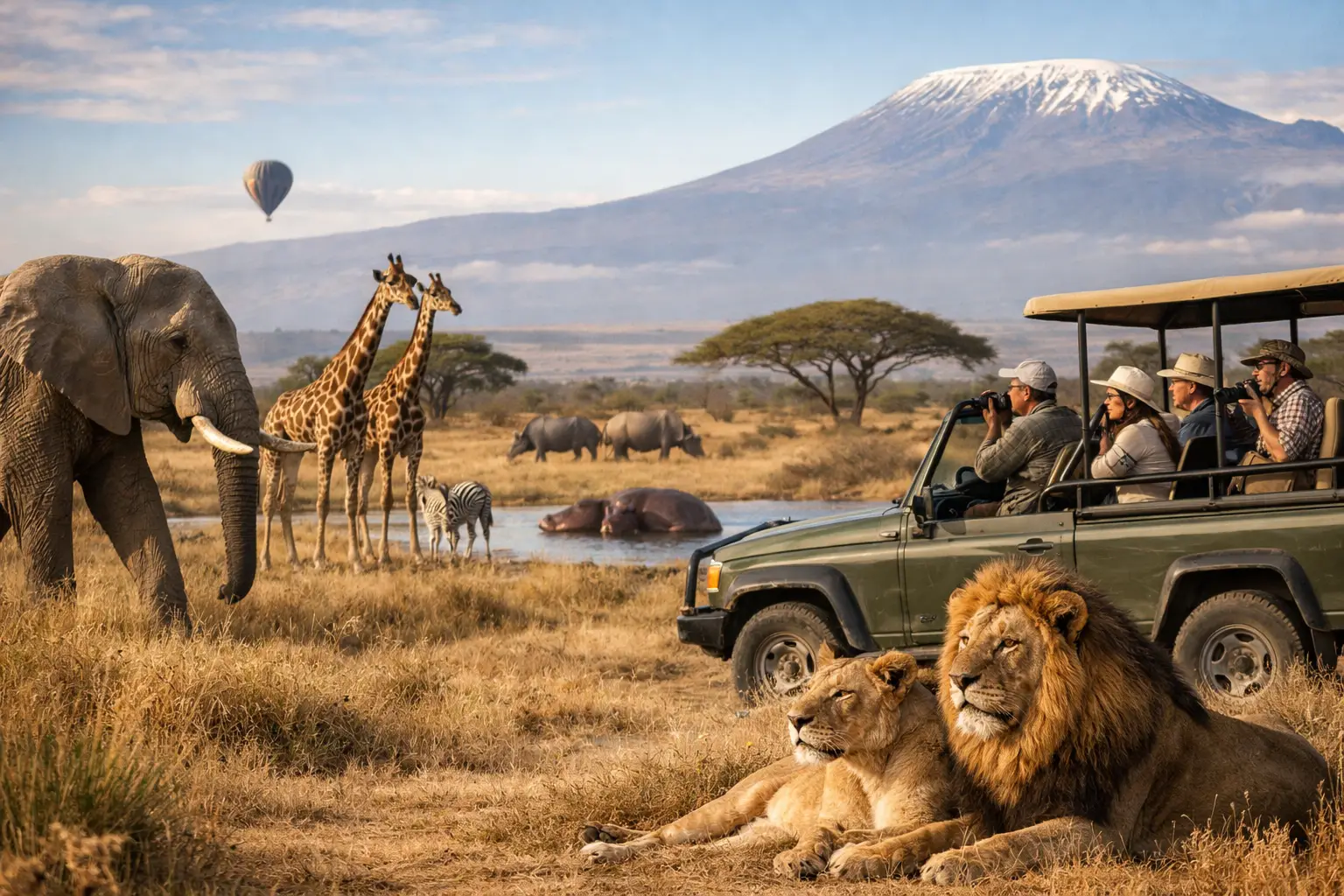
Laikipia brings a more private, conservation-driven style of safari, often with fewer vehicles, strong guiding, and activities beyond standard game drives. Depending on the property, you may add horseback riding, camel walks, or meaningful community visits. Amboseli offers one of Africa’s great visual signatures – elephants moving across the plains with Mount Kilimanjaro in the background.
Kenya works particularly well for travelers who value a mix of iconic wildlife and elegant flexibility. It also suits families and repeat safari-goers who want to combine famous reserves with private conservancies that feel more intimate.
Tanzania: scale, drama, and landmark wildlife areas
If you are drawn to vast landscapes and a sense of grandeur, Tanzania earns its place near the top of any conversation about the best African safari destinations. The Serengeti is one of the continent’s defining wildlife regions, and for good reason. Its scale is immense, the predator density is strong, and migration movement creates different safari experiences across the year.
The Ngorongoro Crater adds a very different kind of game viewing. Wildlife concentrations can be excellent, and the crater floor offers a compact, visually striking contrast to the open Serengeti plains. For many travelers, the appeal is pairing these two regions in one seamless journey.
Tanzania is ideal for guests who want the romance of classic tented camps, outstanding guiding, and a true sense of being immersed in wilderness. It is also a destination where planning details matter. Camp location, season, and routing can significantly affect what you see and how your days feel.
Where Tanzania can surprise seasoned travelers
Travelers who assume Tanzania is only about the northern circuit often miss some of its most rewarding quieter areas. Southern and western parks offer a more remote, less trafficked experience, though they may require longer flights and a higher tolerance for distance. That trade-off can be worth it if exclusivity matters more than checking the most famous names off a list.
Rwanda: gorilla trekking with remarkable polish
Rwanda is not a traditional Big Five safari destination in the same way Kenya or Tanzania are, but it is absolutely one of the best African safari destinations for travelers seeking a rare, emotionally powerful wildlife experience. Gorilla trekking in Volcanoes National Park is intimate, moving, and physically engaging in a way game drives are not.
What makes Rwanda especially compelling for luxury travelers is how well the experience can be delivered. Access is relatively efficient, lodge standards are high, and the overall journey can feel exceptionally well-paced for a shorter, high-impact trip. It is also an excellent addition to a longer East African itinerary.
Rwanda suits travelers who value depth over volume. You are not coming here for endless game drives across open plains. You are coming for one of the most meaningful wildlife encounters on earth, delivered with sophistication and strong conservation context.
Uganda: primates, biodiversity, and a richer sense of discovery
Uganda appeals to travelers who want a safari that feels more layered and less expected. Bwindi Impenetrable Forest is one of Africa’s premier gorilla trekking destinations, while Kibale is famous for chimpanzee tracking. Add in Queen Elizabeth National Park or Murchison Falls, and Uganda becomes a destination where primates and classic safari elements can coexist in one itinerary.
Compared with some more polished safari circuits, Uganda can feel more adventurous. That is part of its appeal. The landscapes are lush, the biodiversity is impressive, and the experience often feels more exploratory. For the right traveler, that creates a deeper sense of reward.
This is often a strong choice for return visitors to Africa, wildlife enthusiasts with a special interest in primates, or families with older children who want substance as much as comfort. The key is calibrating expectations correctly. Luxury exists here, but the style is typically more understated than in South Africa or certain parts of Kenya and Tanzania.
South Africa: refined lodges and easy combinations
For travelers who prioritize ease, comfort, and broad appeal, South Africa is one of the best African safari destinations available. Private reserves bordering Kruger can deliver excellent Big Five sightings, polished hospitality, and a very high standard of guiding and accommodation. This is often where first-time safari travelers feel especially at ease.
South Africa also makes itinerary design simpler. You can pair safari with Cape Town, the Winelands, or the coast without forcing the trip to feel overcomplicated. That flexibility is especially attractive for couples celebrating a milestone, multigenerational families, and travelers who want one journey to include wildlife, food, scenery, and urban sophistication.
There are trade-offs, of course. Some travelers prefer the wider-open feel of East Africa and the visual drama of tented camps over the more structured rhythm of reserve-based safari in South Africa. But for many luxury travelers, the ease of travel and consistency of service are major advantages.
Which of the best African safari destinations is right for you?
If the Great Migration is your priority, Kenya and Tanzania usually lead the conversation. If gorilla trekking is non-negotiable, Rwanda and Uganda become essential. If you want an elegant first safari with minimal friction, South Africa often rises quickly to the top.
The more interesting question is how these places can work together. A well-designed safari does not have to stay in one country if your time and budget allow for more range. Kenya and Rwanda can pair beautifully. Tanzania and South Africa create a strong contrast between classic East African safari and urban-coastal refinement. Uganda can be the right choice for travelers who want a less conventional route with real depth.
This is where bespoke planning matters. The best itinerary is not built around what is most famous. It is built around what will feel most memorable to you – your wildlife interests, your comfort preferences, your tolerance for internal flights, your appetite for adventure, and how much stillness or movement you want in the trip.
A final note on luxury safari planning
At the high end of safari travel, destination choice is only the beginning. The lodge within the park, the guide assigned to your stay, the aircraft routing, the season, and the balance between marquee locations and quieter regions all shape the experience. Two travelers can both visit the Serengeti or the Maasai Mara and come away with entirely different impressions based on how the journey was designed.
That is why the best african safari destinations are best understood not as a fixed top-ten list, but as a set of exceptional possibilities. When chosen thoughtfully and combined well, they create a safari that feels personal rather than prepackaged. And that is usually the difference between a good trip and the one you will still be talking about years later.